
The new Google inactive account policy and what happens with email marketing
Will this modification affect your deliverability? Possibly, indeed. However, you shouldn't be concerned if you're adhering to email deliverability best practices. Don't let it impact your deliverability.

1 min read

This week, Google plans to begin removing dormant email accounts, a move that might have a big effect on certain email marketers.
Google gave customers six months to take action when it first announced the idea in May. The proposal only applies to accounts that haven't been used for at least two years.
On some level, Google may be helping email marketers by offering this cleanse because inactive email accounts don't interact with marketing emails, reply to messages, or make purchases. However, not all email marketers have that mindset.
How will the Gmail update impact your deliverability?
You shouldn't be concerned if you're adhering to email deliverability best practices.
Sending mass emails to inactive or nonexistent recipients is a quick method to damage your engagement metrics and sender reputation, which has a significant detrimental effect on your deliverability. As you are aware, email providers consider various variables when determining whether to flag a sender's communication as spam, including bounces, blocks, and lack of engagement on sent emails.
Sending to dormant accounts is therefore already negatively affecting their deliverability. Senders that adhere to basic practices shouldn't be alarmed by Google's decision to remove inactive accounts. However, you should make sure that all of those email addresses may be contacted if you intend to send to an outdated email list.
How to protect your deliverability
There is one key list-targeting measure you can do to get ready for this change, which will affect accounts and hence the addresses in your list. Even though they are generally accepted best practices, they can be modified to particularly target Gmail addresses.
Create a specific segment with the following definitions to exclude these recipients on future broadcasts:
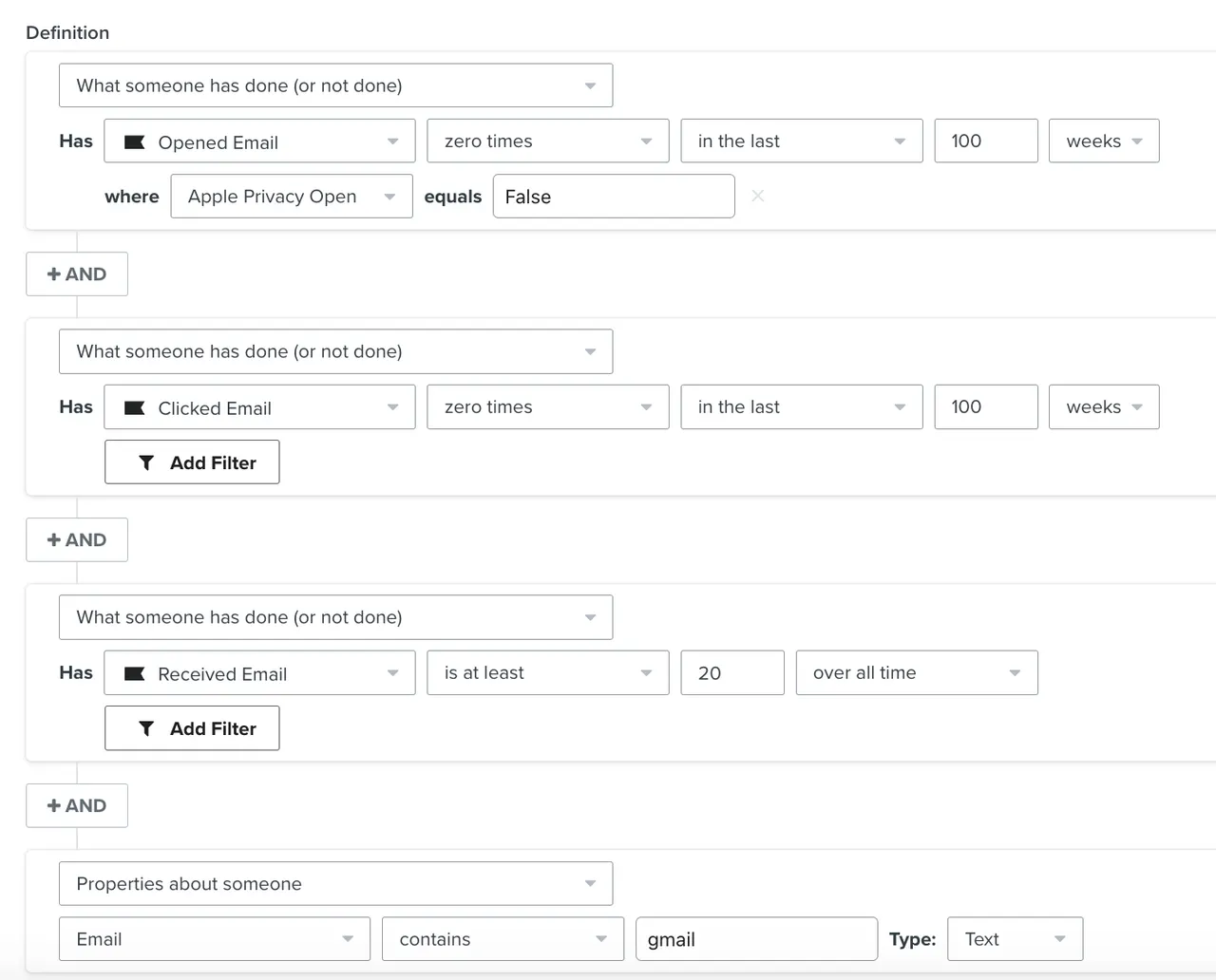
For some email marketers, the idea of inactive accounts being deleted may seem unsettling. If so, we understand that managing your sender reputation might be challenging. However, you shouldn't be concerned if you're heeding our recommendations for email deliverability best practices.
Unbelievably, Google upgrades like this one occur frequently. With our Newsletter, you will always be kept informed.
Written by Fernando Portela
Retention marketer focused on Email and SMS for DTC and CPG brands. Seven years building, fixing and scaling Klaviyo programs, with a soft spot for deliverability.
Keep reading
All articles- Fernando PortelaDeliverability
How to resolve a sudden Gmail 550 5.7.1 (unread)
Learn how to fix Gmail’s 550 5.7.1 error and stop your emails from being rejected. Discover what triggers it, what content to avoid, and how to restore your sender reputation with Google’s reconsideration form.
- Fernando PortelaGmail
The End of IP & Domain Reputation in Gmail Postmaster Tools (unread)
Gmail quietly changed how deliverability will be measured. The removal of IP and domain reputation metrics from Gmail Postmaster Tools marks the end of an era for performance tracking.
- Fernando PortelaTips
Gmail Deliverability Issues in September–October 2025? Try this (unread)
If your emails keep landing in Gmail’s spam folder, Google’s new Sender Contact Form might help. It lets you request a review of your domain’s filtering status and possibly recover your inbox placement faster.